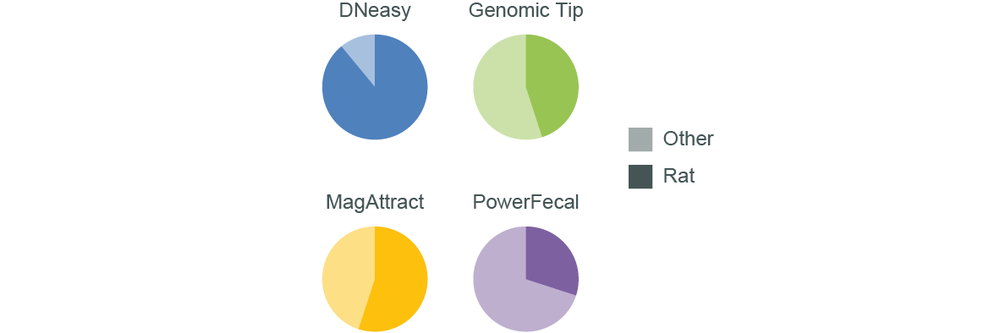
Rat stool DNA – QIAGEN DNeasy Blood & Tissue Kit


Extraction Method
Rat stool DNA – QIAGEN DNeasy Blood & Tissue Kit
FOR RESEARCH USE ONLY.
Contents
Materials
Method
Results
Sequencing performance
Materials
- 3 rat stool pellets
- QIAGEN DNeasy Blood & Tissue Kit
- QIAGEN RNase A
- TE buffer (1 mM EDTA, pH 8.0)
- Lysis buffer (100 mM Tris-HCl, 100 mM EDTA, 10 mM NaCl, 1% N-lauroyl-sarcosine, pH 7.5) – as described by Maudet et al.
- 20 ml scintillation tubes
- 2 ml Eppendorf tubes
- 1.5 ml Eppendorf DNA LoBind tubes
- HulaMixer™ Sample Mixer
- Microfuge
- Incubator
- 96–100% ethanol
Method
Transfer 3 rat stool pellets to a 20 ml scintillation tube and add 500 µl of lysis buffer.
Using a HulaMixer™ Sample Mixer, rotate the tubes at 20 rpm for 15 minutes at room temperature. If a HulaMixer™ Sample Mixer is not available, gently invert the tubes every minute for 15 minutes. Depending on the sample condition (e.g. moisture content and preservation state), it is possible that the pellets start to absorb the lysis buffer – if this happens, more lysis buffer should be added.
Transfer the supernatant, which should be ~200-300 µl, to a 2 ml Eppendorf tube. Take care to avoid transfer of solid matter.
Add 200 µl of buffer AL and 20 µl of Proteinase K from the DNeasy Blood & Tissue Kit, and 4 µl of RNase A (100 mg/ml) to the tube with the supernatant, and mix thoroughly by inversion.
Incubate the sample for 90 minutes at 56°C.
Purify the lysate according to the QIAGEN DNeasy protocol for blood samples (page 26, steps 3–6).
Critical Step: To maximize the DNA yield, we recommend carrying out the elution step (step 7) by adding 75 µl of warm TE buffer (70°C) to the membrane, followed by incubation at room temperature for 30 minutes.
After the incubation, spin the column in a microfuge at 4000 rpm for 2 minutes, and collect the eluted DNA in a 1.5 ml Eppendorf DNA LoBind tube. Repeat the above step once more, and pool the eluate to a total elution volume of 150 µl.
Take ~45 µl of eluate (corresponding to 3 µg of DNA) and perform a SPRI size selection.
Results
- Yield: 9-12 µg
- OD 260/280: 1.94 (after SPRI selection)
- OD 260/230: 2.12 (after SPRI selection)
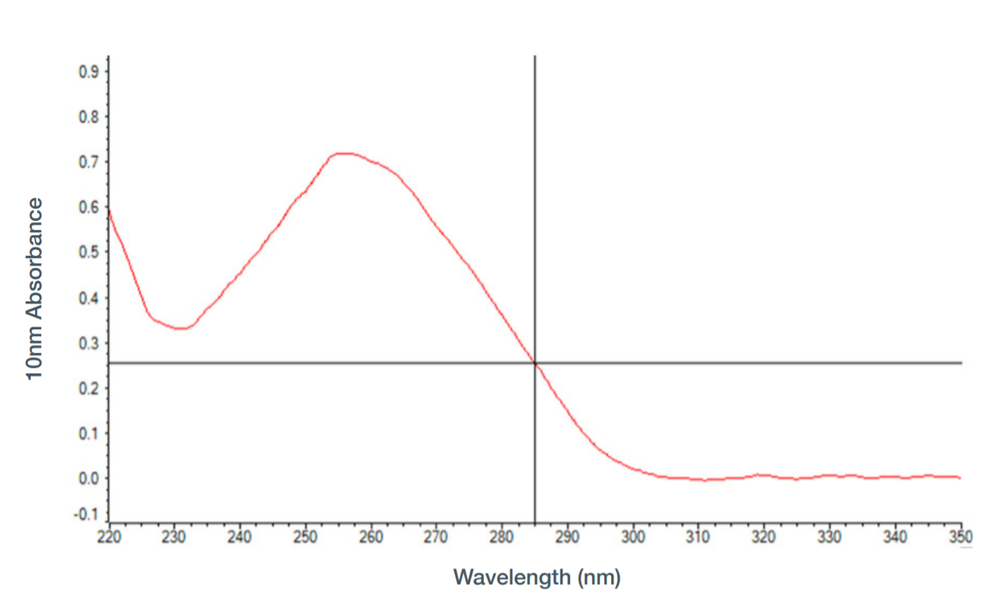
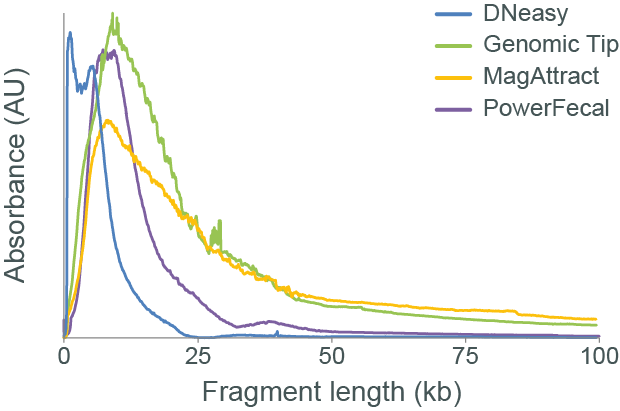
Fragment size (FEMTO pulse) after SPRI size selection:
Sequencing performance
Libraries were prepared using the Ligation Sequencing Kit.
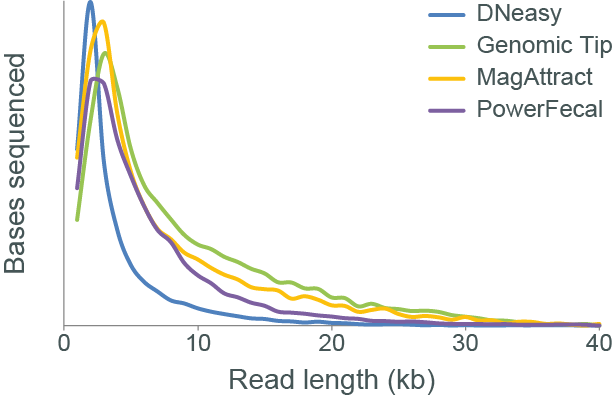
- Read length profile:
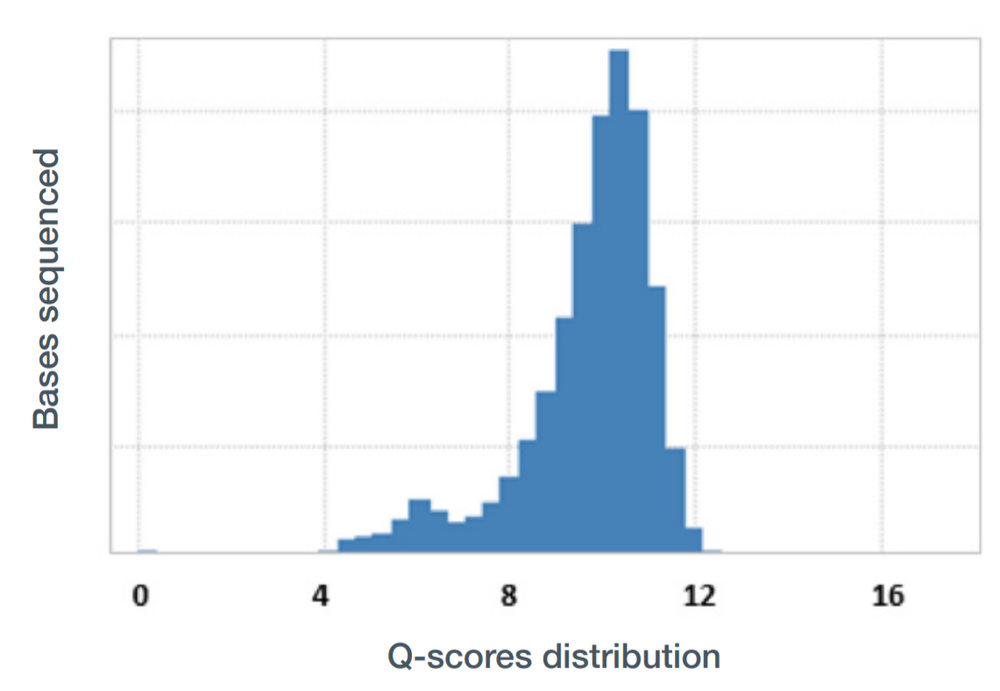
- Qscore distribution:
- Alignment results: