Measuring Soil Health With Nanopore Sequencing
- Published on: June 6 2017
- Source: Science Practice Ltd
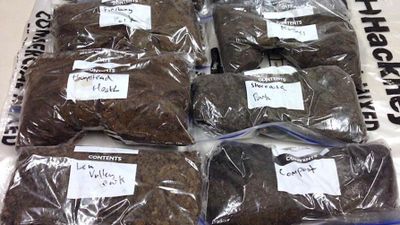
If a farmer wants to understand the health and fertility of their soil, they could send a sample to a lab for chemical analysis. This produces useful data, including levels of: 1) nitrogen, 2) phosphorus, 3) potassium and 4) pH. These data points can help the farmer decide which crop to grow, what type of fertiliser to use and how much to apply. But it’s well-known that soil is much more than a simple reservoir of farming nutrients. Soil contains millions of species of bacteria, fungi and archaea that form the most diverse and intricate ecosystems on earth. We wanted to understand whether a biological analysis of soil might complement the way that farmers understand their soil. So we’ve spent the last 6 months bootstrapping a soil genetics lab and running a proof-of-concept experiment using Oxford Nanopore’s MinION sequencer. Here’s what we found out.