
Simplify your tumour methylation profiling sequencing
The Oxford Nanopore tumour methylation profiling solutions provide integrated genomic and epigenomic analysis of native DNA. Choose from three research protocols designed for singleplex analysis (including an ultra-rapid option) or scalable, multiplexed tumour profiling.
Why choose Oxford Nanopore for tumour methylation profiling
High-coverage multiomic sequencing of solid tumour samples in one go
Ultra-rapid tumour profiling for time-sensitive sequencing
Bait- and primer-free flexible digital panels that simplify your workflow
Oxford Nanopore tumour methylation profiling solutions
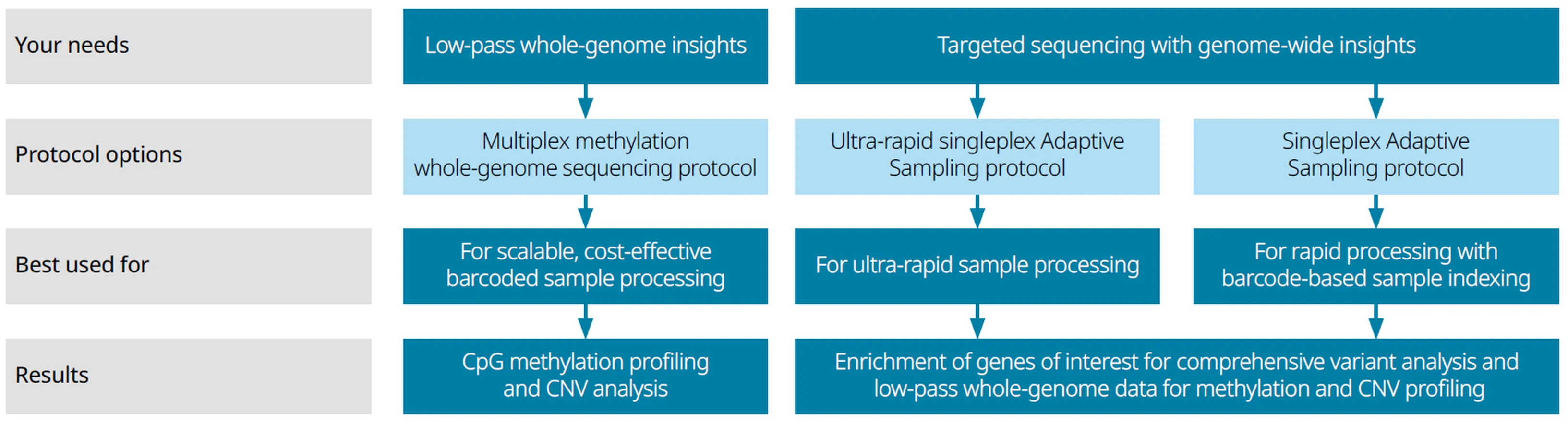
Generate single-base methylation resolution and capture copy number variants (CNVs) with the four-sample per PromethION flow cell multiplex methylation whole-genome sequencing protocol. The two singleplex Adaptive Sampling protocols use the ready-to-use Pan-Cancer Panel to enrich 723 cancer-associated genes (full list here), while retaining low-pass whole-genome data for methylation classification and CNV analysis.
For research use only (RUO). Not for use in diagnostic procedures.
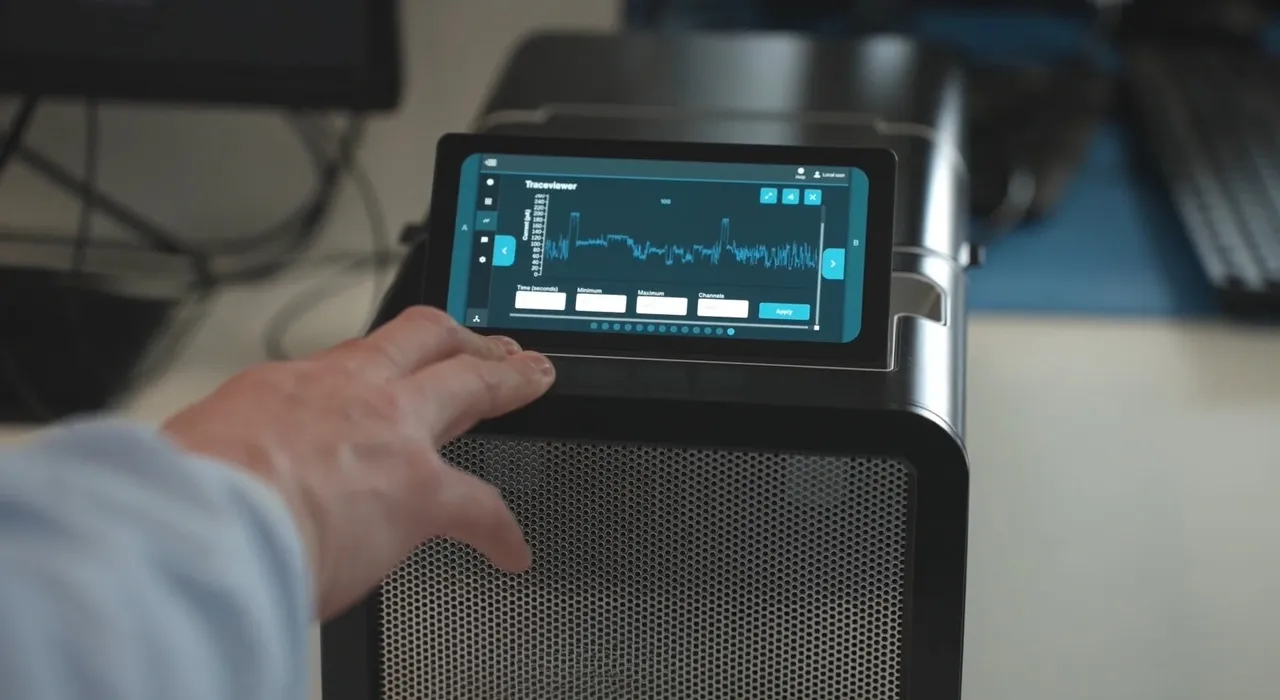
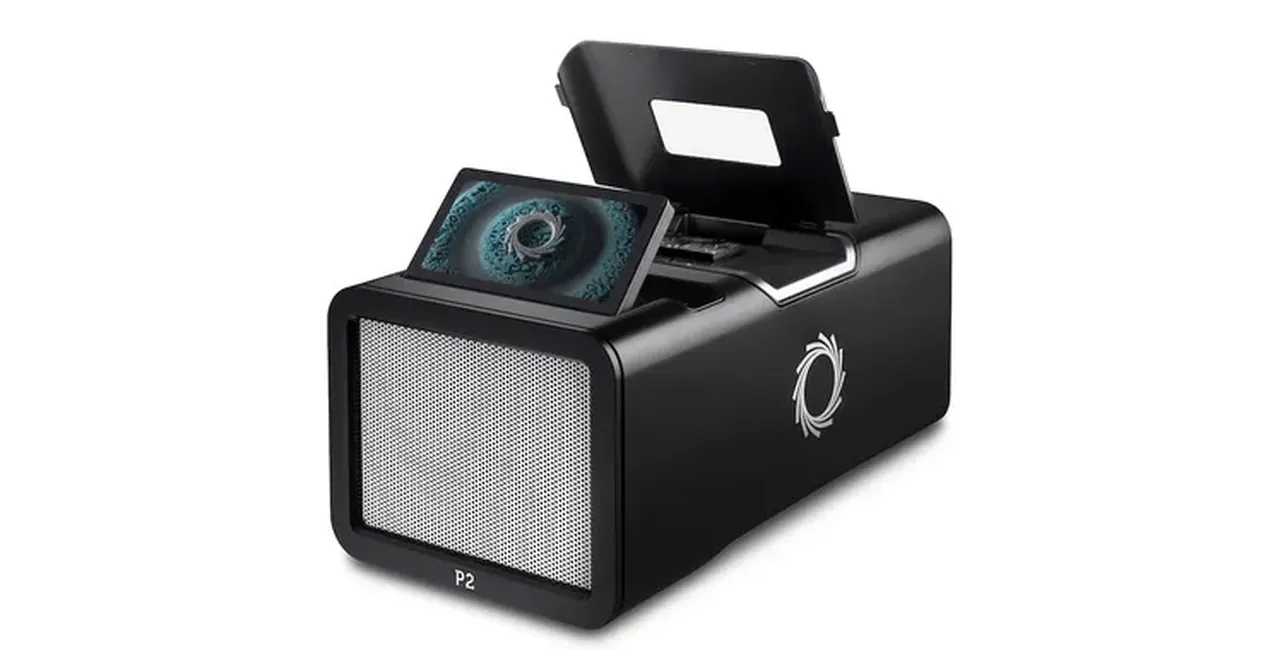
PromethION 2 Integrated
As powerful as it is streamlined, generate rich multiomic data with the PromethION 2 Integrated. Featuring two independent flow cells with high-performance onboard compute, achieve efficient on-sequencer enrichment across the whole genome from the singleplex Adaptive Sampling protocols through to the scalable multiplex methylation protocol.
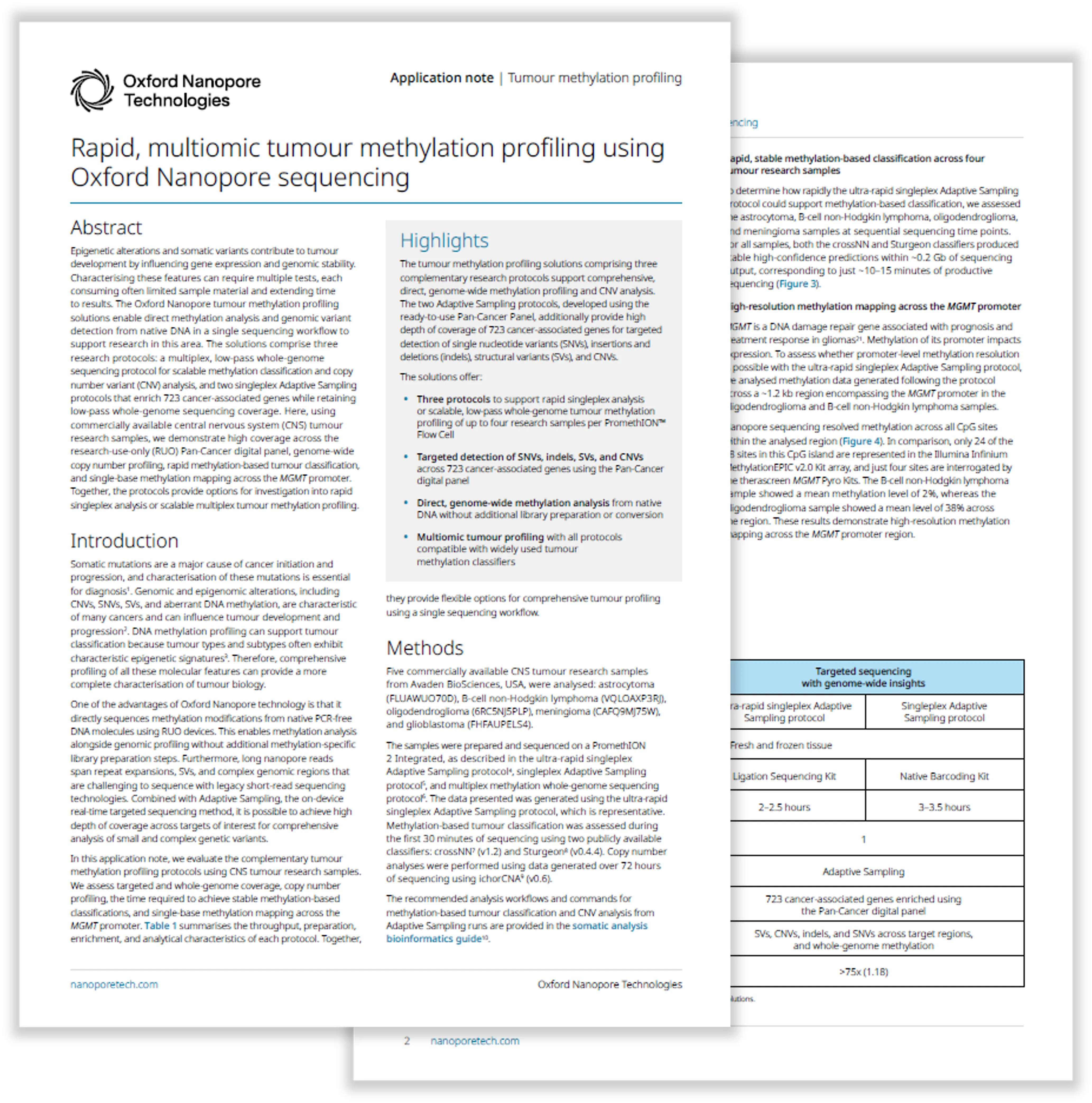
Rapid, multiomic tumour methylation profiling using Oxford Nanopore sequencing
Discover how Adaptive Sampling combined with direct methylation sequencing has the potential to provide a transformative alternative to traditional sequencing approaches. This application note includes our benchmarking data generated using the ready-to-use Pan-Cancer Panel.
Download app note
FAQs
What is the difference between the three tumour methylation protocols?
The tumour methylation profiling solutions comprise three RUO protocols to support molecular profiling of solid tumour samples across different experimental needs.
1. Multiplex methylation whole-genome sequencing protocol: for scalable, low-pass whole-genome methylation and CNV profiling for up to four samples per PromethION Flow Cell
2. Singleplex Adaptive Sampling protocol: for rapid barcode-based sample indexing
- Ultra-rapid singleplex Adaptive Sampling protocol: for ultra-rapid sample processing
Both Adaptive Sampling protocols use the Pan-Cancer Panel to target 723 cancer-associated genes and enrich genes of interest for comprehensive variant analysis and low-pass whole-genome data for methylation and CNV profiling.
The research-use-only Pan-Cancer Panel is a ready-to-use digital panel that targets 723 full-length genes, including UTRs, exons, and introns, associated with a range of cancers. It is designed for use with the singleplex and ultra-rapid singleplex Adaptive Sampling protocols.
During live sequencing, Adaptive Sampling enriches for the genes defined by the digital panel in real time while retaining low-pass whole-genome data. This enables targeted analysis of genetic variants alongside genome-wide methylation profiling and CNV analysis in one go.
What is the Oxford Nanopore Pan-Cancer Panel?
The Pan-Cancer Panel is a ready-to-use research-use-only digital panel that targets 723 full-length genes, including UTRs, exons, and introns, associated with a range of cancers. It is designed for use with the singleplex and ultra-rapid singleplex Adaptive Sampling protocols.
During live sequencing, Adaptive Sampling enriches for the genes defined by the digital panel in real time while retaining low-pass whole-genome data. This enables targeted analysis of genetic variants alongside genome-wide methylation profiling and CNV analysis in one go.
What does the Pan-Cancer Panel target?
The Pan-Cancer Panel targets 723 full-length genes associated with a range of cancers, including exons, introns, UTRs, and promoters, enabling comprehensive variant analysis and low-pass whole-genome data for methylation and CNV profiling. Variants detected include:
Targeted analysis
- Single nucleotide variants (SNVs)
- Insertions and deletions (indels)
- Structural variants (SVs)
Genome-wide analysis
- Copy number variants (CNVs)
- Methylation patterns
How many genes are included in the panel?
The Pan-Cancer Panel targets 723 full-length genes associated with cancers, including EGFR, MET, CDK4, CDKN2A, CDKN2B, and IDH1. View the complete target list.
What type of sample do these protocols require?
The multiplex methylation whole-genome sequencing protocol requires approximately 250 ng DNA per sample, and the Adaptive Sampling protocols require 500ng-1ug DNA per sample (2ug of input DNA is recommended when available). We recommend extracting DNA from either fresh or frozen tumour tissue and sequencing each sample on a single PromethION Flow Cell. To download data from different sample types visit the Tumour Methylation Profiling Dataset Epi2Me blog
What are the benefits of using Oxford Nanopore methylation data to classify tumour samples?
Tumour classification typically requires extensive molecular characterisation of genetic alterations and DNA methylation patterns. Current techniques, such as microarray analysis, only assess methylation markers across limited CpG sites, and legacy short-read sequencing technologies require bisulfite conversion.
Oxford Nanopore technology sequences native DNA without additional library prep, which preserves methylation modifications for direct DNA methylation analysis alongside genetic variant and CNV profiling. This enables you to explore genomics and epigenomics in one go from a single sequencing run, with outputs compatible with widely used tumour methylation classifiers.
Find out how Min Seon Park and Danny Miller used Adaptive Sampling to rapidly profile brain tumours in their latest publication.


