Epigenetic sex markers support sea turtle conservation under climate change | LC26
- Published on:
Abstract
Climate change threatens species in ways that are both profound and difficult to measure. Species with temperature-dependent sex determination (TSD) are at risk of demographic collapse due to climate-driven sex ratio skews. These include all sea turtle species, which develop as females at warmer temperatures, with many populations predicted to produce exclusively female hatchlings by the end of the century. Yet sea turtle conservation has faced a critical blind spot: there has been no scalable, non-lethal method to identify hatchling sex in the wild, limiting the ability to verify current sex ratio projections. We show how native DNA methylation sequencing via Oxford Nanopore technology facilitates the development of non-invasive sex biomarkers for green turtle (Chelonia mydas) hatchlings using skin biopsies. Through PromethION sequencing, we identified over 21,000 differentially methylated sites between the sexes of hatchlings from geographically distant populations in Hawai’i and Western Australia. This parallel approach suggests that sex-specific epigenetic biomarkers can be applied as reliable and transferable indicators of climate impacts on sex determination across global populations. We are now upscaling this approach to a large biobank of Hawaiian hatchling skin biopsies to assess contemporary sex ratio trajectories and directly inform management strategies. By operationalising these biomarkers, we will provide a robust method to quantify demographic shifts at a scale previously impossible for wild sea turtle populations. More broadly, we highlight nanopore-based methylation sequencing as an accessible technology for discovering conservation-relevant biomarkers within the epigenome of non-model species and translating them into real-world management practices.
Biography
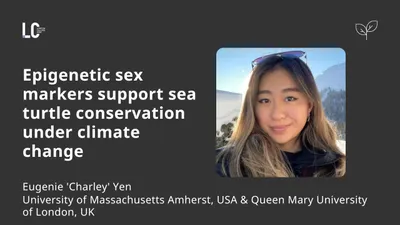
Dr Eugenie ‘Charley’ Yen is a Postdoctoral Researcher at the University of Massachusetts Amherst and Queen Mary University of London, where she is working in collaboration with NOAA Fisheries to develop high-throughput epigenetic approaches for Hawaiian green sea turtle conservation. Previously, she completed her PhD at Queen Mary University of London in 2025, during which she developed genomic and epigenomic tools for loggerhead sea turtle conservation.