An integrated long-read sequencing workflow for molecular profiling in facioscapulohumeral muscular dystrophy | LC26
- Published on:
Abstract
The molecular diagnosis of facioscapulohumeral muscular dystrophy (FSHD) is challenged by the intrinsic limitations of standard assays in fully characterizing the 4q35 locus. Advanced sequencing technologies now provide an opportunity to improve the molecular resolution of FSHD testing. This study aimed to establish a long-read sequencing (LRS)-based protocol coupled with a dedicated bioinformatic pipeline to simultaneously assess D4Z4 repeat size and methylation levels, 4q haplotype, and the presence of variants in FSHD2-associated genes. High molecular-weight DNA was extracted from peripheral blood using the Puregene Blood Kit (Qiagen). Libraries were prepared from 2.5 μg of DNA using the Ligation Sequencing Kit V14 (SQK-LSK114), and 600 ng of library was loaded onto a PromethION Flow Cell and sequenced for 72 hours on a PromethION platform (Oxford Nanopore Technologies). The bioinformatic workflow (4eVAR) was developed using specific anchors and molecular markers (p13E-11, pLAM, PAS, and 4q/10q telomeric signatures) to selectively extract informative long reads, enabling identification of permissive 4qA alleles and accurate D4Z4 size estimation. The pipeline also enabled direct 5-methylcytosine detection and identification of FSHD2-related variants through long-read alignment, variant calling, and annotation. The protocol was evaluated in a pilot cohort of six patients with FSHD and compared with results obtained using standard methods. High concordance was observed across all parameters in all the tested samples. Although validation in larger cohorts is required, these results indicate that an integrated LRS-based workflow may provide a feasible single-assay approach for comprehensive molecular characterization of both FSHD1 and FSHD2, potentially reducing turnaround times and diagnostic complexity.
Biography
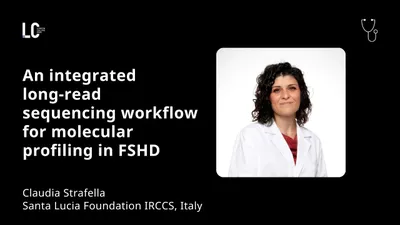
Claudia Strafella is a biomedical laboratory scientist at the Santa Lucia Foundation IRCCS, where she works in both diagnostic and research settings focused on genetic muscle diseases, particularly FSHD. Her research interests center on improving diagnostic accuracy and understanding the genetic and epigenetic mechanisms underlying FSHD. She has contributed to the development and validation of a methylation assay that improved the FSHD diagnostic workflow, and to NGS-based identification of genetic modifiers that can contribute to disease variability and penetrance.