A guide to Adaptive Sampling: targeted sequencing reimagined from Oxford Nanopore

- Published on:
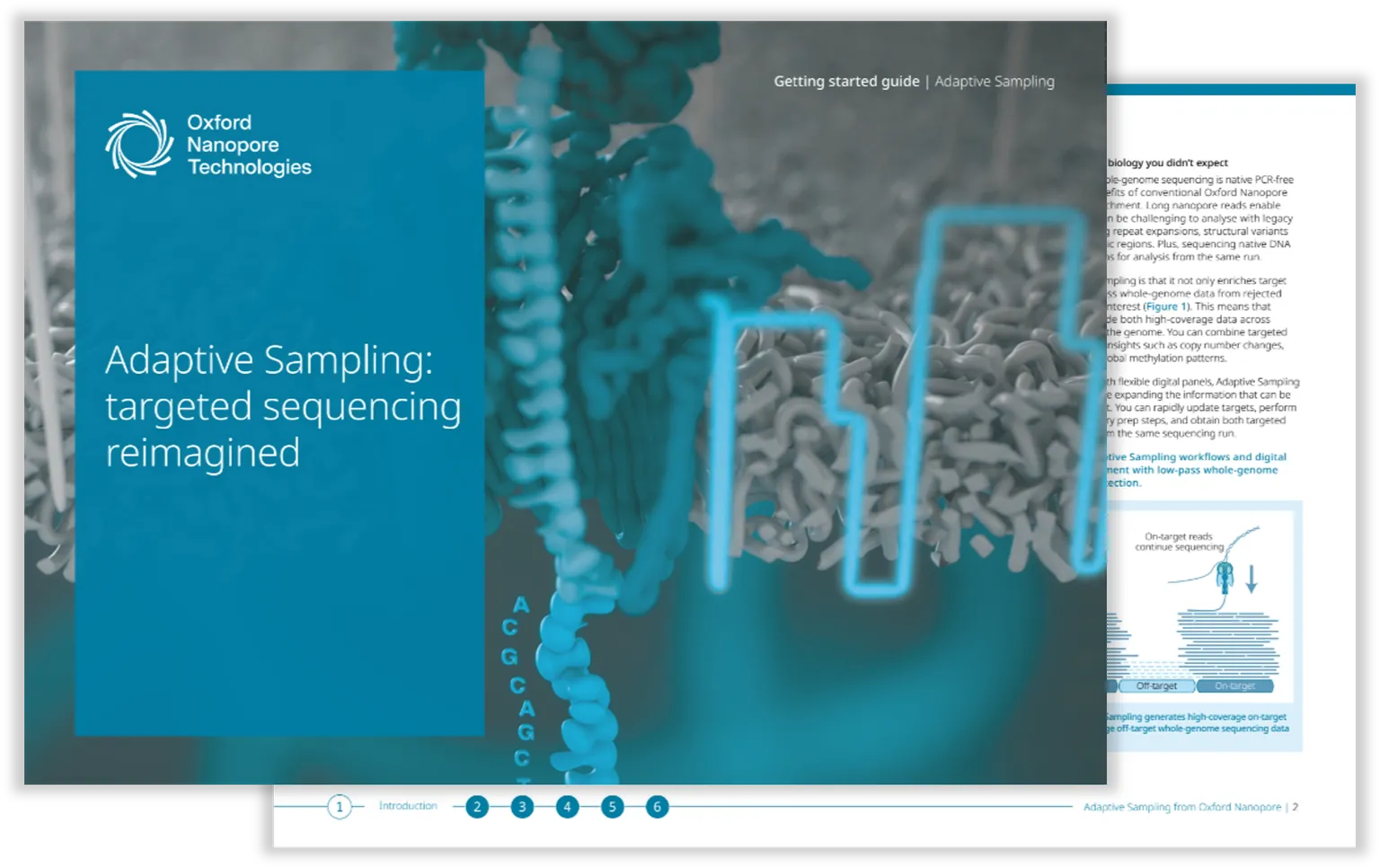
Targeted sequencing is widely used to increase the depth of coverage of specific regions of the genome, often requiring specialised library prep and custom primers or probes designed for target regions. As the need for more rapid and comprehensive genomic assays evolves, modifying targeted assays can become time-consuming and costly.
This guide introduces Adaptive Sampling, a unique on-sequencer, real-time targeted sequencing method. It uses BED-file-defined digital panels to enrich regions of interest during live nanopore sequencing whilst generating low-pass whole-genome data, providing an enhanced whole-genome view with a simple, flexible multiomic sequencing approach.
In this getting started guide, you will:
- Find out how Oxford Nanopore sequencing delivers flexible target enrichment with low-pass whole-genome sequencing and methylation detection
- Learn about our modular solution for flexible target enrichment across a range of applications using either ready-to-use research-use-only digital panels and custom panels
- Discover our Digital Panel Designer tool to create custom panels in minutes
- Read real-world case studies of how Adaptive Sampling is being used by the Community


